Why G-code
The surface in the photo is the surface you’ll ship.
Most 3D renders start from the STL, the smooth shape you designed. We start from the G-code, the path your printer follows, so every bead in the photo is one it will print.


The same shade, filament, light and camera; only the geometry differs. Both close-ups are 512 × 512 px at full resolution, cut from 2000 × 2000 renders.


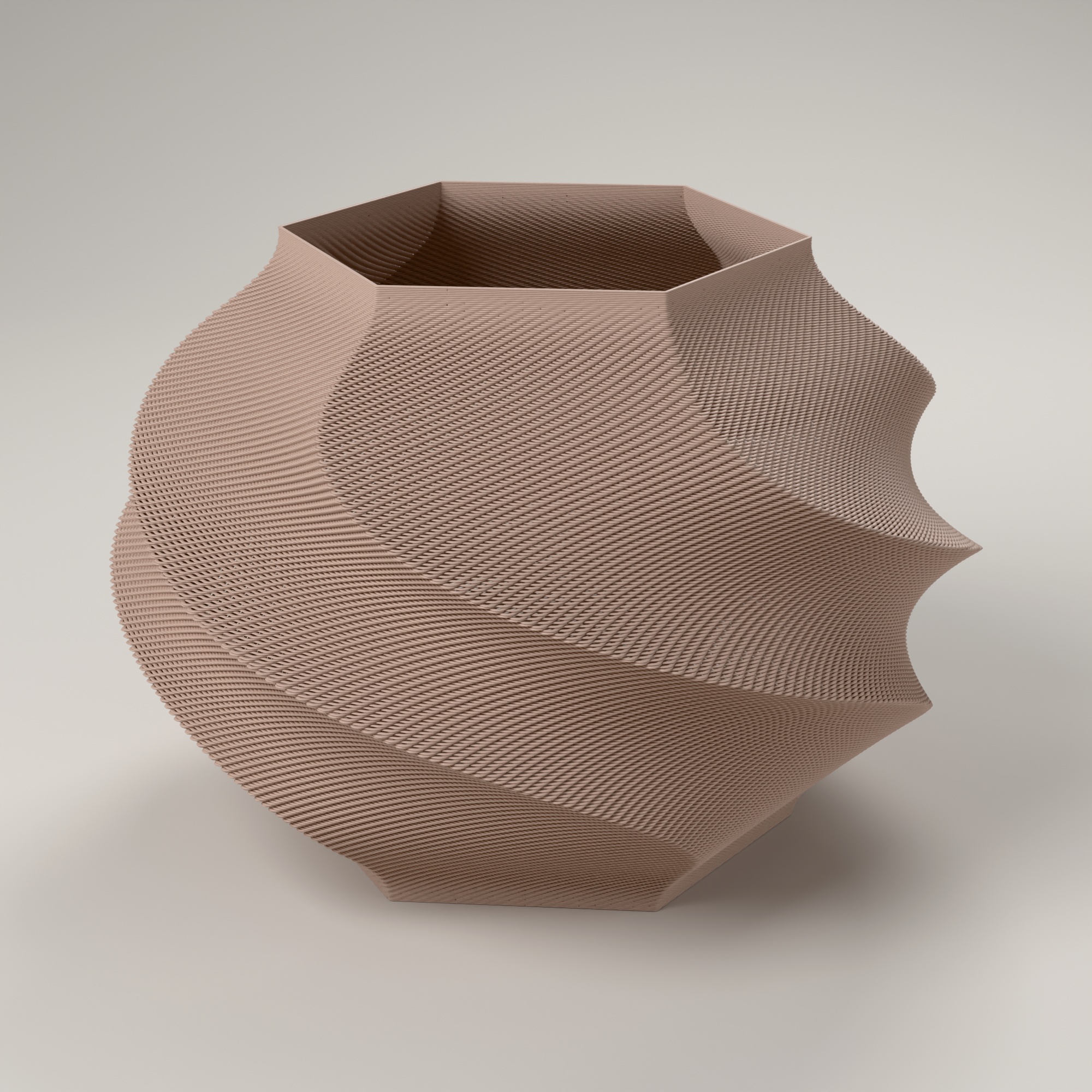
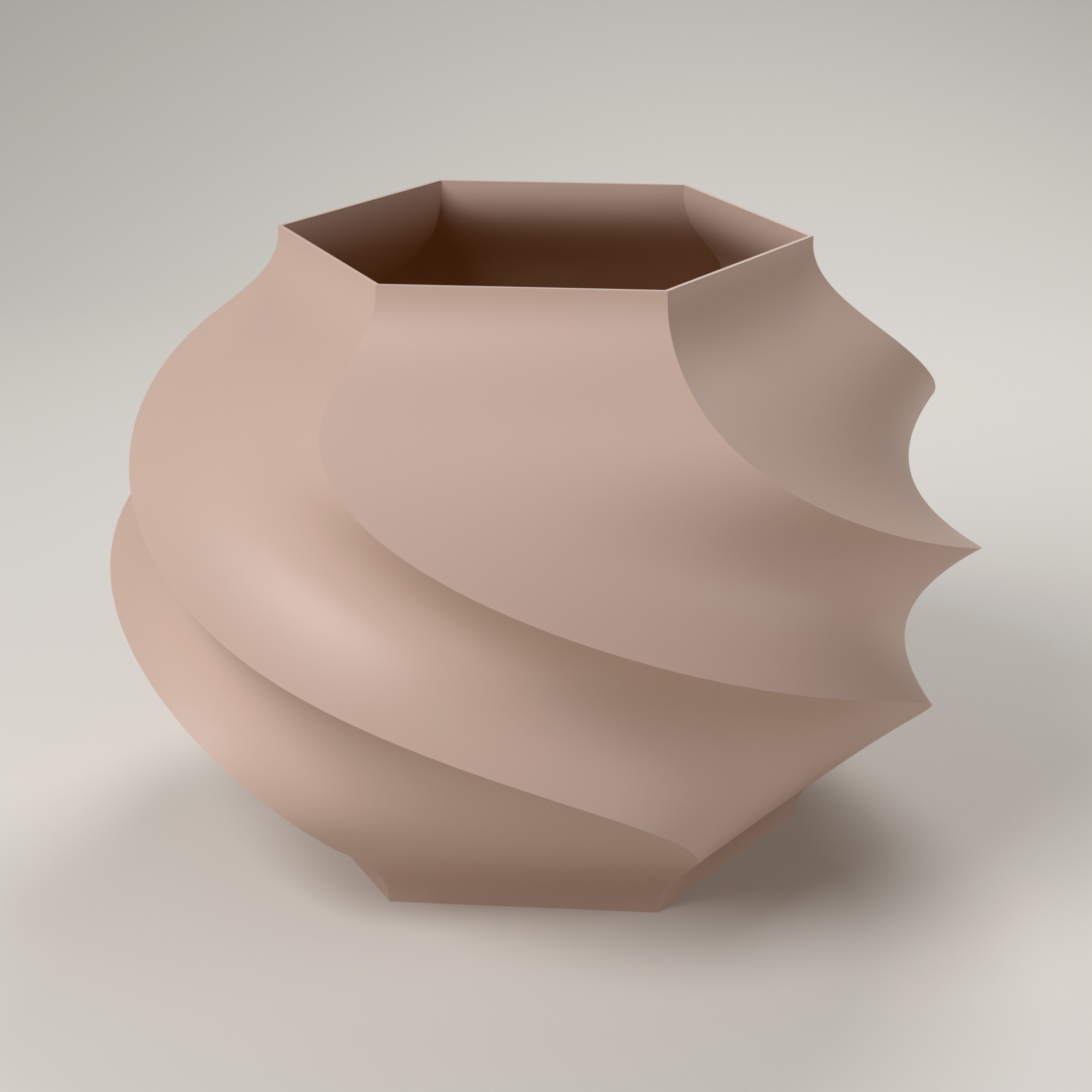
In the app, every finished image opens at 100%, so you can check the layer lines yourself, and a push-in video closes in on them.
Built from the file your printer reads
Every line of G-code moves the nozzle. We build a bead of plastic along each move that extrudes, so the surface in the render is made of the beads your printer will lay down.
G1 X117.712 Y27.842 Z75.693 E0.06142G1 X118.146 Y27.808 Z75.693 E0.06589G1 X118.601 Y27.811 Z75.694 E0.06895G1 X119.052 Y27.804 Z75.694 E0.06823G1 X119.469 Y27.738 Z75.694 E0.06368G1 X119.645 Y27.676 Z75.694 E0.02824G1 X119.975 Y27.469 Z75.694 E0.05893G1 X120.126 Y27.320 Z75.695 E0.03217G1 X120.373 Y26.974 Z75.695 E0.06410G1 X120.587 Y26.576 Z75.695 E0.06828G1 X120.796 Y26.169 Z75.695 E0.06907G1 X121.031 Y25.805 Z75.696 E0.06541G1 X121.314 Y25.521 Z75.696 E0.06063G1 X121.662 Y25.336 Z75.696 E0.05957G1 X122.065 Y25.250 Z75.696 E0.06238G1 X122.510 Y25.231 Z75.697 E0.06733G1 X122.969 Y25.240 Z75.697 E0.06952G1 X123.413 Y25.223 Z75.697 E0.06716G1 X123.750 Y25.154 Z75.697 E0.05200G1 X124.103 Y24.984 Z75.697 E0.05921G1 X124.156 Y24.946 Z75.698 E0.01001G1 X124.439 Y24.657 Z75.698 E0.06103
Common questions
Why not an STL?
An STL is the smooth shape you designed. Renders made from it have no layer lines, so the print looks molded. The G-code holds every line your printer will lay down.
Are these AI images?
Not AI-generated. Each image is a physically based render, made in Blender’s Cycles from geometry built from your G-code. The last pass removes render noise with Cycles’ denoiser, which is a trained network.
Try it on your own prints.
Upload a sliced file and see your first render.
New accounts start with 20 free credits.